Thursday, November 30, 2006

Holiday Scam-busters

This is not about what to buy great Aunt Martha or cousin Quagmire. It's about how to give and not give to people you don't even know.

Every Christmas and, in fact, most of the year, I participate in an assortment of social service projects. I've organized everything from small specific needs programs to citywide disaster recovery efforts. That's not necessarily part of my role as a professional bureaucrat, but more like my self imposed role as a member of the human race. This will sound false and pretentious to some, but I genuinely care about people. There, I said it. Not only that, my friends care about people. My co-workers care about people and even my kids care about people.

Having said all that --

THE GOOD -- 'tis the season to be charitable.

THE BAD -- 'tis the season to be swindled.

Friends, give until it hurts but be very careful where you send your money and who you buy Angel Tree, Santa Cop, or Christmas Wish gifts for. Make sure whatever cause, family, program, or event you contribute to can provide you with accountability.

That's right.

A-C-C-O-U-N-T-A-B-I-L-I-T-Y

I'm sorry to say that Christmas provides the ideal opportunity for tender hearts and deep pockets to be taken advantage of. Sometimes the cost of serving many is being bled by a few. That's just the way it goes. But there's a big fat line between a few crafty people milking the system and a program that is a downright scam or enables exploitation by its ineffectiveness.

Legitimate programs do not object to questions. They know that confidant donors recruit other donors. While you probably don't need to research the Salvation Army, Toys for Tots and other familiar programs, the ones closer to your own home may not be so well known. And, people may POSE as Salvation Army or Toys for Tots but have no affiliation with them.

So, ask questions!

ORGANIZATIONS - look them up online, check with the Better Business Bureau and Chamber of Commerce. Is it a 501(c)3? How long has it been around? How much of your money goes to pay administrative costs? Where do surplus toys go? Are they checking with other organizations to see if their families are on multiple angel trees or getting help from other programs?
* tax deductible charitable organizations are listed with the IRS. Look them up on the IRS website
* charities are required to to file a Form 990 and provide it to anyone when requested (churches are exempt from this)
* tax I.D. numbers and tax exemption certificates are not proof of charities who collect tax deductible contributions.
INDIVIDUALS - if you don't know them personally, ask for identification and references and then follow up. Find out where and how the funds are set up and dispersed and ask for financial reports. Better yet, volunteer to help with your time and labor and see how they respond. If an individual is running a food pantry, toy drive or clothes closet, they will usually have a local church or chapter of an organization that can back them up.

EMAIL DONATIONS - just don't do it. Reputable organizations do not usually solicit donations from individual consumers by e-mail. Links in unsolicited e-mails to access the web sites of charitable organizations are usually bogus.

PHONE SOLICITATIONS - don't cave in to high pressure tactics. Many organizations use a semi-legitimate sounding name or one that closely resembles the real thing and play on your desire to help widows or children born with birth defects and diseases. Ask for a call back number and tell them you will get back to them as soon as you verify who they are with the IRS or with your state's attorney general's office. Or, tell them you will mail a check to the corporate office. If that doesn't work for them, hang up. "Now or never" deals are always a scam.

DOOR TO DOOR - don't give money or toys to kids. Don't. If they are collecting canned foods, blankets, or eyeglasses, you can probably give with confidence. But even if they're lying to get free canned foods, blankets, or eyeglasses, well, they probably need the stuff and you ought to give it to them anyway. It's not like they are going to sell your green beans on eBay. If adults solicit for a cause like March of Dimes or Muscular Dystrophy, they will have an official prepaid donation envelope they can leave with you that you can mail at your leisure AFTER you have checked the address. Again, "now or never" deals are always a scam.

ONLINE AUCTIONS - you are dealing with a nameless, faceless person and trusting that they really will give a portion of their sales to another organization. Enough said.

STREET SOLICITORS - fireman boots are frequent in Texas and the Shreiners often collect at intersections for the children's hospital. There's not much time at a traffic signal to ask for i.d. or to see a permit so you pretty much just have to go with your gut on these. But if the collection cans are crudely made and don't have a lock on it or the individual soliciting doesn't appear to have a posse of co-solicitors on every other corner, save your change and drop in the salvation army bucket at the local Walmart.

Bottom line: if you live every day for yourself alone and do nothing at all for your fellow man, yours is a shallow life. But don't be a sucker. There are far too many people who genuinely need your help to waste your money on those who don't.

Federal Trade Commission Charity Checklist

Saturday, November 25, 2006

Screenwriting, Podcasts & Magic

Still new to this whole iPod thing, I haven't quite figured out how podcasts work. I think it's magic. Yup. I have 288 songs (which is pretty much a misnomer since they come from movie soundtracks) on my iPod, but podcasts -- well, I can play them on my 'puter but can't seem to figure out how to put them on my iPod.

I just don't have the magic touch.

Anyway, yesterday I found the Creative Screenwriting podcasts among several other screenwriting related ones and oh my gosh, these things are uber cool!

Did you get that?

U-B-E-R cool!

50,000 subscribers to Creative Screenwriting podcasts and I'm just now catching up.

How sad.

You don't need an iPod to listen to podcasts (duh, I haven't figured out how to get them on my iPod) so that means all of us can listen to a range of writers from John August, Josh Olson, Ted Elliott, and Terry Rossio to Jonathon Nolan, Michael Arnt and Jason Reitman.

From Texas and at my own convenience, I get to listen to screenwriters in various stages of their careers, broadcasting from Los Angeles about their amazing, insane, and frustrating craft.

Want to hear from Paul Haggis at 3:00 a.m.?

No problem.

It's magic, I tell you!

I love it that Jeff Goldsmith, senior editor for CS, always introduces himself with a "howdy". I do that! I've often re-recorded my talking cartoon hottie to REMOVE the "howdy" because I thought the rest of the world couldn't appreciate that "Howdy" is good form. I won't do that anymore! Jeff's "howdy" has set me free! And, each podcast sounds like it is orchestrated specifically for me.

It is, you know.

Magic.

Be sure you listen to Ted Elliott and Terry Rossio talk about Dead Man's Chest. Seriously, people, you cannot pay for a better education than these guys keep handing out for free. FREE! No excuses. And, a lightning bolt goes off every time I hear or read anything from them.

Magic.

The Thank You for Smoking podcast is interesting with Jason Reitman, although the sound is lame because the host was stingy with their sound board. Jason talks about why he became a writer instead of making sub sandwiches or healing the sick and credits his father with pointing out that while those other professions are sensible and even noble, he knew his son wouldn't be satisfied doing either one.

His reason is the same reason the rest of aren't satisfied doing whatever it is we do all day to pay the light bill. It's the reason we clack at the keyboard for hours after working a ten hour day doing a job we may even love. It's why nothing else but writing satisfies that urgent need to create. It's why nothing else fills that void.

Not enough magic.

Wednesday, November 22, 2006

Defending Deja Vu

Naturally, I'm biased toward Bill Marsilii and Terry Rossio. They are brilliant writers and the screenplay for Deja Vu is genius.

Period.

I've read the negative reviews that contradict the good ones and while Tony Scott's cameras make me motion sick, I can say this -- my daddy commits the most gosh-awful crimes against choice cuts of beef. He uses barbecue sauce, steak sauce, and even ketchup and I'm not entirely sure he doesn't use them all at once. But the fact of the matter is that while he finds it delicious and I find it nauseating, a sirloin is still a sirloin regardless of what he does to it.

The amazing screenplay for Deja Vu never lags yet the film often trudges through molasses. But even covered in molasses Deja Vu is still a sirloin.

Monday, November 20, 2006

Two More Days


Terry Rossio says it's an incomprehensible mess. Bill Marsilii's outlook is not so bleak. Folks, I've read the screenplay. It's amazing. Making a mess of a brilliant screenplay still has to translate into better viewing than some of what's out there. Can't wait. Really.

Sunday, November 19, 2006

Dead Protag Addendum

My recent post on Pidgeon Holing Dead Protagonist still feels incomplete. I have many films left to watch. But geez, how many films can a working/writing gal watch in a week? Most recently, I watched V for Vendetta, Pay It Forward and The Godfather.

Before I get to these two films, a refresher....

DEATH BIOGRAPHICAL - character dies because character portrayed did
DEATH HISTORICAL - historically, it's what happened
DEATH EMANCIPATORY - death is freedom
DEATH OSTENTATIOUS - the big bang
DEATH ANTICIPATORY - death is ever present threat
DEATH MATRIMONIAL - death demonstrates love story
DEATH AS SYNTHESIS - brings the story full circle
DEATH SACRAMENTAL - brings reconciliation or reform
DEATH EXPLANATORY - autobiographical narration
DEATH ANTAGONISTIC - protagonists are also antagonists
DEATH RECANTED - ersatz death

V for Vendetta and Pay It Forward are examples of DEATH SACRAMENTAL. The death of the protagonist brings about social and moral reform. In V for Vendetta, there was no other way to accomplish the goals of the protagonist. But, in Pay It Forward, was it really necessary? The reform would have taken place anyway, gradually, like filling a bathtub one drip at a time. Instead, the writer chose to turn both faucets on full blast.

Much of my suggested viewing, including The Godfather, does not qualify for this study at all. Vito Corleone is not the primary protagonist. And, Michael does not die. If Michael dies in part two, I would guess that his death might exemplify DEATH ANTAGONISTIC, DEATH ANTICIPATORY, and maybe even DEATH OSTENTATIOUS or DEATH AS SYNTHESIS, but I don't know. Still have to see the second one. Oh, shut up! I'll get to it!

Charlotte's Web - Wilbur is the primary protagonist, not Charlotte.
Star Wars - Luke is the primary protagonist, not Obi Wan.
The Green Mile - John Coffey is secondary to Paul Edgecomb
Steel Magnolias - Six protagonists. Is there a primary? M'Lynn, methinks.

Why does the death of the secondary protagonist not qualify? Because that's a whole different study in itself -- one that I don't think I'll undertake because the reasons for the death of a sidekick or mentor are varied but I would guess (yes, guess, I'm a rookie) they usually deal with somebody else's journey, growth, discovery, etc.

So, I think I'm done with this one for awhile and will concentrate on films where the protagonist is the bad guy and whatever it is that makes it work.

Thursday, November 16, 2006

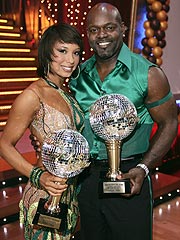
Real Men Watch Emmitt

For awhile, real men kept it a secret around these parts that they'd been watching Dancing With The Stars. After all, men around here don't discuss television unless it's about sports and these days, most of the chest pounding is about the Dallas Cowboys and Tony Romo.

But yesterday, it was a former Dallas Cowboy that stole the barber shop talk. I also heard him discussed at the Post Office, the gas station and the newspaper office. Big, burly, beafeaters in coveralls, cowboys hats, and overalls were talking about Emmitt Smith and confessing openly that they had not only watched every single episode and were skipping Wednesday night church, after hour drinks, or plowing up that last acre to watch the results show, but they had even called to vote for the football legend.

This has to be a new demographic for that show!

The comments were funny, thought provoking, and downright ridiculous at times but everyone I overheard seemed to agree that Emmitt is a role model Dallas can be proud of and dancing seems less sissified now.

MOST MEMORABLE COMMENT:"Running a football ain't so very different from them moves with that little gal."

Monday, November 13, 2006

A Savage Breast

"Music hath charms to soothe a savage breast, to soften rocks, or bend a knotted oak." William Congreve

I was a wee little hunk o' junk when I first heard this line from The Mourning Bride misquoted in a Bugs Bunny cartoon. But, no matter how you butcher it, it's true. Beast, breast, chest -- music soothes them all.

While I was acting like the Tazmanian local government dust devil today, my Hans Zimmer CD, "The Wings of a Film", was playing on my computer. I had just erupted into a sleep deprived Texas tornado when the Fire Chief insisted my relentless headaches could be from high blood pressure. His opinion sounded all the more ludicrous accompanied by the theme from Driving Miss Daisy.

What a goob. What was he doing in my office anyway?

I mean, yeah, people yell at me now and then because the highway access roads were just converted to one way and nobody thanks me for the drought restrictions that prevent them from washing their cars and we just had a nail biting bond election, but I've never had high blood pressure -- not even pregnant.

By now, Thelma and Louise was playing and I was not about to be bullied into a blood pressure check over a hectic work day.

But would that guy give it a rest? Not even when I told him that I had just had a thorough exam two weeks ago with normal blood pressure, a perfect EKG and new migraine meds.

There he stood with his little stethoscope and blood pressure cuff.

Waiting.

One minute. Two. Three.

I'm fine. Go away.

Nothing.

Hello? People are looking at us.

Five minutes.

Still there.

Beat it! I have speeches to write, people to pacify, reporters to pester.

And then he slapped the cuff on my arm.

Oh, come on, Chief! Like this is necessary? In front of people, even?

I've never seen The Thin Red Line, but one of its themes was playing when that man took the steth out of his ears and gave me an ultimatum. Did I want him to call an ambulance or would I allow him to drive me himself in his shiny new Fire Chief car?

Could I play with the lights?

No.

Well, did the new car have a CD player?

It did.

Sunday, November 12, 2006

At World's End

Warning. Check your blood sugar after reading this post.

I'm loathe to admit how anxiously I am looking toward the release of the third Pirates of the Caribbean. Just look at that costume! Terry Rossio had a post some place where he discussed how stunning the Singapore set is.

I can only imagine.

Every scene in Dead Man's Chest is a work of art. Freeze any frame and it's optical glucose overload -- the sets, the locations, the costumes, the lighting, the framing, the makeup -- breathtaking! Terry Rossio says the sets in At World's End are even more amazing? Sweet heaven, I'm going to need insulin for all the eye candy. Don't even get me started on the ear candy. And, duh, the achronym for At World's End is AWE.

Yeah, I'm a nauseating fan.

Wednesday, November 08, 2006

Clapping for Bad Guys

My next study deals with villains as protagonists and once again, I'm relying on my fellow bloggers to help me come up with film examples because most of the films I can think of are all on our dead protagonist list. Aren't there films where the protagonist is a villain but doesn't die? Off hand, I can only think of Munich, Swordfish, Catch Me if You Can, and Inside Man -- sort of. I actually need to watch them all again to refresh my memory. A little help?

Monday, November 06, 2006

Who are the Champions?

This article in variety suggests that not only is breaking in hard to do, but that to do it you need, among several other things, a champion. I've heard this term used before and yes, I know it doesn't necessarily mean an agent. Still, it puzzles me.

What am I looking for? (cue Bonnie Tyler - Holding Out For a Hero) Surely not a knight in shimmering armor and fire in his eyes, atop a lofty steed, and waving my screenplay at the end of his lance?

Are we talking about a professional screenwriter willing to pause in his busy career to promote mine? A janitor willing to sneak my scripts into the reading material basket next to Steven Spielberg's toilet? Somebody who straps road flares to his chest until an auto parts mogul agrees to buy my brake pads?

The effort and the skill with which you show
How well inspiring are your gifts of grace
Displayed for all the truth of what I know:
"There lies a noble heart, mind, soul and face."
With skill and courtesy you took the field
Prepared for challenge from the very best.
With honor well contended, win or yield
You shared chivalric glory with the rest.
The real challenge lay not with the foe
But in the hazards brought by thy own tests.
"Surpass yourself" is guidance writ in gold.
Its victory brings prize of answered quests.
My Champion, how well you fought for me.
Now must I strive for worth, to worthy be.
Perhaps I'll hold off on the champion thing until, as the poem suggests, I know that I am worthy.


The Thinking Writer on Champions

Sunday, November 05, 2006

Remember, Remember

Remember remember the fifth of November
Gunpowder, treason and plot.
I see no reason why gunpowder, treason
Should ever be forgot...

So, I am catching up on some of the films I haven't seen and imagine my surprise when I sat down to watch V for Vendetta this afternoon and it starts our with this Fawkes nursery rhyme. I had NO IDEA who or what this film was about and even though I had to look up a few Guy Fawkes details and watch the film a second time to get the full impact of the parallels, I like this movie. I'm going to have to put this one in the DEATH SACRAMENTAL category where the protagonist's death brings about some kind of social, moral or governmental reform.

Friday, November 03, 2006

The Puppy Search

You'd think it wouldn't be so hard to find a puppy. After all, they're in animal shelters, advertised in the newspaper, posted online, and displayed in Walmart parking lots. But if you're looking for a specific dog -- say, a Cocker Spaniel puppy to replace a beloved pet who died last year -- it ain't so easy.

I'm in no hurry, obviously. I've waited over a year. Plus, I have my precious little half Chihuahua/half Yorkshire Terrier who has me wrapped around his little paw. But he's all alone during the day and needs a companion lest he shred every aloe vera plant, eat every tube of Chapstick and hide every pair of the boys' dirty boxers in peculiar places around the house. Ever fallen into your soft fluffy bed only to wonder why it smells like gym socks? Check under the pillow. Your lonely puppy may have buried his treasures there.

I digress.

There are a lot of puppy mills out there peddling sickly inbred little Cocker Spaniel puppies and I can't bear the thought of taking one home only to watch it die. Neither do I want to pay hundreds of dollars for a puppy when there are so many homeless dogs languishing in shelters.

What to do. What to do.

Monday, October 30, 2006

Pigeon-holing Protag Deaths

Whew! Well, this was a daunting task that I regretted shortly after it began. Convinced that the death of the primary protagonist must have a story value that can be named, categorized and later replicated, I sifted through films where a primary protagonist dies, looking for logic and common threads. It was so depressing to keep watching the good guy die that I had to watch The Chipmunk Adventure to get out of my funk.

I've broken protagonist deaths into eleven categories but it's important to keep in mind that --

(1) there are likely many more categories - I couldn't find them all

(2) these categories pertain ONLY to the primary protagonist(s)

(3) this study only applies to protagonists that are still dead at film's end

(4) most films mentioned fall into more than one of these categories

(5) I'm not categorizing films. I'm categorizing death.

Why is it important to keep those five things in mind? Because I have NO IDEA WHAT I'M DOING, THAT'S WHY! And because the parameters of the study affect the results. Please feel free to call my attention to a category I may have missed.

So, here we go --

Death Biographical - The purpose of deaths in biographical films is self evident. Quite simply, the primary protagonist(s) die because the character(s) portrayed actually died. While there is not always a demand for deep meaning or structural purpose of the death, screenwriters are not exonerated from crafting a compelling story. The death scenes in Bonnie and Clyde and Amadeus are unforgettable for me but many biographical films stop short of showing the character's death onscreen because the filmmakers may not see an artistic, structural, or creative benefit to showing the onscreen death, particularly the death of a beloved icon like Buddy Holly, Ritchie Valens, or Selena Quintanilla.

Death Historical - There is no other way for films like A Perfect Storm, The Alamo and United 93 to end without rewriting history. They all die. So the screenwriter's role in portraying these deaths is to orchestrate a story that makes viewers want to see the film even though we may already know the ending. Viewers need order, sequence, a driving force, or character motives that help us relate to events that are foreign to us. Even though the events are recorded in history books, the story still has to be written.

Death Emancipatory - Sometimes, death is viewed as a last act of defiance but I don't think it's that simple. Thelma and Louise were used, exploited, mistreated and oppressed by men. Death was preferable to going to jail and once again, living under the control and at the mercy of men. Suicide is in character for them and not the cop out ending I expected. It's about taking control and breaking free of the real or perceived bonds on their lives, much the way Maggie Fitzgerald dies in Million Dollar Baby. She doesn't want to live the way anyone else tells her to and in the end, she fights for death rather than live as an invalid. In both these films, death is liberation. Death is control. Death is ownership.

Death Ostentatious - Quiet and contemplative death or blaze of glory? Butch Cassidy and the Sundance Kid aren't going to sit around and be victimized. The end of their story has to do justice to the lives portrayed. I think this may be the same reason Oliver and Barbara Rose both die at the end of War of the Roses. The marriage ends with the ultimate visual punchline -- until death do us part. It reminds me of a line in Amadeus where Salieri tells Mozart that the audience needs a big bang at the end so the they will know when to clap. Films sometimes need a big bang, too. An ostentatious death ending is one way to do it.

Death Anticipatory - Films are tense and angst ridden when we know that at any minute, the protagonist could die. Death is an ever present anticipation in many disaster films, crime dramas, gunslingers, and war films. Is there any question that Michael Sullivan's days are numbered in Road to Perdition and that he will, indeed, eventually reap what he sows? We hope Captain John Miller won't die in Saving Private Ryan but in war and in disaster films like the Poseidon Adventure, bad things happen to good people so every gunshot, every falling beam and every explosion is the adrenaline rushing potential death of a character we are growing increasingly invested in. We're on the edge of our seats and that's good writing. But it has to be logical. In Diehard, the reality established in the film for John McClain makes him all but invincible. We cringe as he walks across broken glass in bare feet but he isn't going to die and we know it. We don't know that in Saving Private Ryan because the reality of that film tries to mirror the reality of war where good guys are gonna die. How many bullets can you dodge? All of them in some films. All but one in others.

Death Matrimonial - Until death do us part? Not always. Love can bridge the gap between life and death onscreen. In both Ghost and The Sixth Sense, the protagonist is dead from the beginning but hangs around because of a love too great to be separated by death. In The Notebook, Duke is so devoted to his wife, Allie, who suffers from Alzheimers, that life would be intolerable for either of them if one were to die. Their simultaneous deaths serve as a snapshot of love everlasting.

Death as Synthesis - Sometimes death is a means of bringing a story full circle -- or full triangle. In Titanic, Rose wanted to die (thesis) until she met Jack who taught her to live (antithesis). By the end of the film, she welcomed death as a means of continuing life as opposed to earlier in the film when she longed for death as an escape from life (synthesis). Most of the protagonist deaths I've watched this week feel like some kind of effort to bring synthesis to the story. Sometimes it works. Other times, I scratch my head.

Death Sacramental - Death of the protagonist can bring reconciliation or social, moral, or governmental reform. Braveheart and Gladiator are based-on-history protagonists. Much is still unknown about William Wallace but he most certainly did not do much of what the film portrays. Even less is known about Narcissus, the slave who killed Lucius Aurelius Commodus and whose name was changed to Maximus some time after David Franzoni finished the first draft of Gladiator. But these films are not documentaries so the protagonists' deaths in both were carefully crafted to do three things: make the protagonist a hero, avenge the death of their wives, and bring about a reformation in government. It makes them noble, heroic and admirable and brings synthesis to the story at the same time.

Death Explanatory - This is what I would call films like Sunset Boulevard and American Beauty where the dead protagonist narrates and explains how he met his demise. Norma Desmond destroyed Joe Gillis rather than lose him. His death is the culmination of her insanity. But the death of Lestor Burnham? Well, I guess are were meant to understand that everyone in his life who thought they would be better off if he was dead -- his daughter, wife, neighbor and himself -- will now have to find out.

Death Antagonistic - So what do you do when your protagonists are also your antagonists? In Troy and in War of the Roses, we are drawn into the stories of opposing sides. Since both the primary protagonists are also the primary antagonists, somebody we are rooting for must lose. In these examples, it's everyone.

Death Recanted - Ever so often, we get thrown an ersatz death when there is a sequel afoot. Dead Man's Chest ends with Jack Sparrow's demise but we're confident that he'll be back. Jack is either fighting for his life in the belly of the beast or a piece of jewelry he stole from Tia Dalma happens to have some kind of resurrection value. We also went through this with Hans Solo in the Empire Strikes Back. The protagonist is gone and we grieve, but only a little. We know he'll be back.

Thursday, October 26, 2006

Need More Dead Protagonists

My list is growing but I still need more names of films where the protagonist dies. I'm at about twenty films now and while I don't plan to dissect each of them, I do want to find the story purpose behind the primary (or an important secondary) protagonist's death. Is it about character? Plot? What's does the death accomplish? Obviously this takes time because I have to watch or re-watch several films. Already, I've seen great variety in purpose and can't wait to map these out on paper. I Netflixed Thema and Louise (is Netflixed a verb?) because although I've never been interested in seeing it before, now I must.

Suggestions?

Tuesday, October 24, 2006

His Name Was Little John


. . . and sometimes I can still feel his head growing strangely heavy against my chest as he took his last breath. It's been one year ago today since I killed my best friend...again. The first time was fourteen years ago. Little John was a replacement puppy who slept at my feet, had a fetish for pacifiers, and liked to yodel. I refused to let him die alone, so I held his little head as the doctor put the needle in his leg and promised me there'd be no pain. He lied. It still hurts.

Sunday, October 22, 2006

Death of the Protagonist

As if I don’t have enough on my plate – unfinished writing projects, a demanding job, even more demanding family life, music to learn, and migraines that reproduce, mutate, and slowly infest every inch of my head the way those cane frogs are plaguing Australia. Nasty little buggers. Anyway, on top of all of that, I get these questions that not even the migraines can quash. What makes a romantic comedy timeless? Is there a purpose behind battle speeches? An now, the latest questions that demand exploring -- the death of the protagonist(s). Why do we kill them and when should they die?

Killing off the protagonist at story’s end is not only about getting shock value, creating emotion, or closing an un-closeable story. While the death of the protagonist may accomplish those things, there also has to be a story purpose for the character’s demise. But what I read are a lot of wannabe's stories where the protagonist’s death feels like an after thought tacked on because the author wanted to add a few tears, a suspenseful ending, or a solution to an impossible situation. Or, he had third act writer's block.

I’ve begun dissecting and categorizing a few films where the protagonist(s) die at the end but I could certainly use additional suggestions and slashers do not count. Slashers are an exception to my “death with a purpose” theory because in slashers, death can be utterly pointless since the point of the whole film IS death. Usually, somebody survives (room for a sequel), but even if the protagonist does die, it is often to end the film with a bang -- a bizarre, unusual, or totally unexpected way to knock the protagonist off.

At least, that's what I'm thinking NOW. These thoughts are subject to change following my little study. I have ten films on my “death of a protagonist" study list and they will take some time for me to dissect and theorize but the floor is also open for suggestions.

Starting --- now.

Thursday, October 19, 2006

Feast Findings

Snickers outnumber scares in FEAST, the third, and likely final, product of Project Greenlight. But, what do I know? Maybe in this genre, like pizza, you can't get enough cheese. Seems to me, though, in a horror film, I shouldn't be scratching my head more than squirming in my seat.

Lest anyone misunderstand, I believe John Gulager has a busy film future -- at least I hope he does. While I'm far from qualified to render a verdict on this genre, if I had to point out the biggest shortcoming in the film, it would be character development.

Characters are so purposely over the top cliche and play such a degree of absurdity that the gags take the bite out of the horror. Having said that, watching Judah Friedlander's character alone, Beer Guy, is worth renting the DVD -- but beware of maggots.

Still if you like horror and aren't lactose intolerant (can stomach cheese), this film is for you, but be forewarned -- FEAST is appropriately titled, not because of the people eating monsters, but because FEAST is a caricatural smorgasborg that pushes the boundaries of taste.

Wednesday, October 18, 2006

Warming Up To Reality


In the past, my only reality show addiction has been American Idol. Oh, shut up! I'm a singer! But I don't watch much television and reality shows just don't do much for me. I've never even seen a single episode of Survivor. Never. Really.

Then there was Emmitt.

Who'd have thought I'd ever watch Dancing With the Stars? But Emmitt is utterly charming. Even Jerry Springer has some charisma when he's not surrounded by trailer trash.

You'd think thirty minutes of Meerkat Manor would be enough but I am quite distraught over Mozart's banishment. Come on, Flower! She's a kid! And, yeah, Bill Nighy's narrations humanize the little buggers but just where is our brave hero, Shakespeare? Did anyone even look for Tosca? Where for art thou, ya little monkey-looking herpestids?

Monday, October 16, 2006

Breaking In or Breaking Out

In March of 2004, I completed my first screenplay -- sort of. It took almost five months to write. It sucked then and countless rewrites later, it still sucks. By the time I finished my second screenplay, I had an agent on the wrong coast and a story beloved by several indy producers (or so they said) but too dark, edgy and expensive to make. More importantly, I had fallen into a trap -- an imaginary and self imposed trap which demanded that I "break in" or admit that I was not a real screenwriter.

Basura. (rubbish)

I didn't start out that way. I started out wanting nothing more than to write great stories. Okay, so they were written in crayon about magic pennies that made Davy Jones fall in love with me and a jealous one legged princess who resembled those goons on Popeye and turned me into a troll so I couldn't sing with the Monkees and cause the group to break up. Thank goodness Gumby and Pokey showed up when they did. Stupid princess. It was a troll that ate her other leg! Was she not worried that I would eat her remaining one? No, she was too wrapped up in that whole leprechaun discrimination thing. Come one! As if lephrechauns PURPOSELY put pots of magic pennies too far for a one legged princess to walk!

I digress... point, point, what was the point?

Oh, yes. The point is that until one ugly day last year, it never mattered to me if anyone read my stories, liked them, or rejected them. Writing was reward enough. I had something to say and I wanted to say it.

Then something happened. No, it wasn't déjà vu and Yoko Ono.

Maybe screenwriters are simply and inherently passionate for breaking in, getting validation, and seeing their work onscreen and maybe it is that passion which drives us to seek out "peer" reviews on sources like Zoetrope and Triggerstreet, befriend other screenwriters, move to Hollywood, and lament day after day over our founts of talent being overlooked because we don't have the right connections.

Whatever the reason, I adopted another way of thinking.

Suddenly, I cared about getting my work onscreen more than I did about the work itself. Story suffered. Creativity suffered. My mind was not full of insane ideas and creative ways to put them on paper. My mind was occupied with an urgency to get inside the gate before it closed, was reinforced with iron bars, and equipped with rookie sensitive cattle prods.

The fun was over.

It was all so serious and unpleasant, tedious and tense. No longer a creative outlet, a release, a thrilling opportunity to clack worlds into existence, writing was now just another overworked, underpaid, and misunderstood part of my life. It was a drag.

So, I quit.

For months, I didn't work on screenplays and vowed not to write another word until --

* I found more joy in writing a single sentence than in the thought of making a sale

* I got that "first love" feeling back every time I crafted a new character

* I wrote for the sheer love of storytelling

It's liberating.

Oh sure, I still sweat over the Nicholl and the AFF but it's the same kind of anxiety I feel when I watch one of my three sons run track, play football, enter an art competition, train for a wresting match, sing, dance, high jump, or play a trumpet solo. I want the whole world to recognize, admit, and publicly proclaim that my kids are better than everyone else's.

Is that too much to ask for my screenplay? I mean -- my kids?

But what I don't do is think about scholarships, commercial art opportunities, dance careers, the Olympics, drum corps recruitment, or professional wrestling contracts. None of that matters right now.

Honestly, I just enjoy watching my kids become who they want to be and I really, really want to raise great kids.

Likewise, I do not submit queries or worry about making a sale. Nor do I maintain a detailed contact list and strategize about how to "break in". It doesn't mean that I purposely miss opportunities and do nothing to promote myself. It simply means that story is what matters most.

Honestly, I just want to enjoy becoming the kind of writer I know I can be and I really, really want to write great stories.

I say this, not to urge anyone to quit writing or to discourage writers from seeking agents, producers, managers, or other writers to help market their work. That's all part of becoming a screenwriter. But I pen this as a plea -- to beg my fellow writers to not allow the desperation of trying to get produced to strangle the joy out of writing.

If that opt or sale or phone call comes that changes your life, I will celebrate for you and if it comes for me, I hope some of you party in my honor. But it's not THE MOST IMPORTANT part of writing.

Break out of that trap -- that vile, deceitful and consuming trap. While I have nothing to support my theory, I suspect that we all have to break out before we can actually break in. Why? Because we'll be much better writers.

Thursday, October 12, 2006

My Blog Anniversary

In honor of my one year anniversary (this past Tuesday), I've perused all 270 posts to see what, if any, real value I've gleaned or shared in the past year and I'm pleased to say that it has not been an entire waste of time -- although it has been a PARTIAL waste of time. I've listed some of the more useful posts and conveniently NOT listed the most babbling, obtuse, and nonsensical ones.

By the way, if you need anniversary gift suggestions -- Final Draft, squirrel repellant, Tijuana Brass CD's and does anyone know if the 1968 Banana Splits program is available on DVD?

Four banana, three banana, two bananas, one
All bananas playing in the bright warm sun
Flipping like a pancake, popping like a cork,
Fleagle, Bingo, Drooper and Snork
So, I guess I'll keep this up another year -- or, until I run out of things to say.

CHARACTER DEVELOPMENT
You Don't Bring Me Flowers Anymore
Why Characters Say No
How Many is Too Many?
Inconsistent Characters
Fish With Feet
Mysterious Characters
Fascinating Characters
Character Empathy
Character Over Gimmick

WRITING ROMANTIC COMEDY
My Rom Com Question
Rom Com-mon Denominator
Learning the Rom Com
Finding the Romance Part Two
Finding the Romance Part One

SUBTEXT
Disappearing Subtext
Deciphering Subtext

EXPOSITION
Properly Exposing
Exposition ABC's
Over Exposure

BATTLE SPEECHES
Purpose of Battle Speeches
More On Battle Speeches

SCREENWRITING & STORY CRAFTING
Thematic Reflexivity
Architects and Designers
How Many Pages Per Diem?
How Good is Good?
Sensible Stories
What Producers Look For
Repugnant Protagonists
Crushing the Villain
Seducing the Audience
Tactics for Making Passes
The Silent Treatment