Showing posts with label story development. Show all posts

Wednesday, June 17, 2009

Make me! Make me! Make me!

You can't make me. Ever say that as a kid? Well, I'm saying it as an adult. You can't make me. Or maybe you can. Can you?

This is one of the most difficult posts I've ever written. I'm typing on a computer the size of a mousepad and while the keyboard is about 90% the size of a regular keyboard, it gives the illusion that it's about 50%. Don't care. I want 100%.

Hence I'm already cranky as I begin my rant.

Maybe the most efficient way to illustrate my recent film pet peeves is to go to the mattresses where my oldest son engages in performance wrestling and regularly endures some of the worst story weaving imaginable. The offenses go like this:
  • Too much too soon.
  • Vague conflict.
  • Same ol' thing again and again.
  • Shouting instead of drama.
  • One dimensional characters.

Obviously, through the course of a 15 minute match, we're not going to see three acts, character arcs, and plot resolution because these storylines drag on week after week. I get that and in some venues where my son wrestles, it actually works. But most places? Yikes.

The difference lies in the person who controls the storylines. Does that person consciously or instinctively understand how to make the audience take a ride?

Performance wrestling should be more like Tom and Jerry. These guys beat each other up every episode but each ride is unique. Characters are clearly defined and periodically arc. Then the Indian givers take back their arcs and it works. They make us love them.

Now. On to film.

My boys and I recently saw a much anticipated new release. My wrestler son is the quickest to point out bad exposition, cliche lines, and inconsistency. For this particular film, he simply barked in his soft voice that carries a big stick, "This sucks." Basically, the film did everything he was accustomed to enduring in poorly written matches.

  • Too much too soon - The protagonist's pain is over-sold and his heroism is nothing to cheer about. Why? Because it's way too early for me to empathize. Don't rush me. Even a roller coaster gives you a few seconds to anticipate a fall. Make me realize I'm ON a roller coaster before throwing me off of it.
  • Vague conflict - Don't assume the audience gets it. Don't. I may not have read the book or seen the headlines the story was ripped from or ever been to other installments of the same series. Whatever. Don't expect me to get it. Make me get it.
  • Same thing - Picture the last time you saw a person running in the woods and she falls down. Big fake deal. Now the murderer is closer. Now she has a twisted ankle. Yeah. It's the same ol' thing. There was a time when it increased the tension. No more. Make me feel the tension. Scare me. Thrill me. Anger me. Whatever. But don't use the same ol' devices.
  • Shouting is not drama - Making your character yell is not the same thing as giving him something to say. He can yell and say nothing. Or, he can yell and say something. Or, he can just say something without yelling. It's not the yelling. It's the line behind it. Make me hear the line behind it.
  • One dimensional characters - Here's your hero. Now love him. Here's your villain. Now hate him. Really? Is that how it works? MAKE me.

So that's that. Make me. Make me love your character. Make me hate your villain. Make me understand the conflict. Make me feel the tension. Make me listen to the lines. Make me!

My original plan was to purposely fill this post with ridiculous typos and then explain my easy bake oven computer to illustrate that I needed to MAKE YOU understand what was going on - not just expect you to assume from the beginning that there was a logical reason for all the typos. Most readers would ditch this post, though, after the first paragraph and I had to make you read it.

My boys and I didn't ditch the movie. We stuck it out even after my son said "who wrote this crap, I want to punch him in the face," and I had to remind him that he wasn't inside the ropes. We stayed. But we didn't stay because the film made us want to stay. The ticket prices kept us from walking out, not the film.

Monday, March 30, 2009

A Montage Menagerie

Found a post on a board where they point us to this breakdown from scripttoolbox.com of three different ways to write montages: (1) series of shots (2) list of scene headings and short descriptions (3) one scene heading and a list of descriptions. This script tip doesn't debate the merits of using montages or discuss how to effectively use them. It basically just gives three ways to write montages IF you choose to use them.

So, when do you choose to use them?


  1. To elevate an emotion. Montages are often used to show the depth of love, loss, grief, joy, or confusion.
  2. Recollection. Montages can be used to show a character's memory of events.
  3. Speed up the story. Montages acknowledge a part of the story that merits mentioning -- but not the time it takes to show it in a full blown story.
  4. To tie seemingly random events together.
  5. To tell a mini-story.
  6. To show background events.
  7. When the director wants it. A lot of montages aren't even written. They're added by a director because that's what he wants.
  8. The writer is taking an unnecessary shortcut to storytelling.

Ouch. Number eight is going to sting a few people. But I've seen it over and over. Writers get lazy and throw a montage in to avoid sorting out a messy area of the story. You can tell when a montage is an integral part of the story telling process and when it was used as a Band-aid for an open wound in the screenplay.

A montage CAN be used to do all those things on this list but it's not the ONLY way or necessary the BEST way. It's not a deus ex machina and it's not a convenient pair of scissors for a screenplay that's twenty pages too long.

I knew a girl in high school who wore an elastic belt with everything. She even wore one with her wrap around dresses and skirts. Why would you wear a belt with a wrap around? To look stylish? Those things tie! One Friday night while we were gathering on the sidelines, she grabbed her waist and said "oh my gosh, I forgot my belt". Um, yeah. I reminded her that our little blue skirts and vests didn't have belts. She told me that she always wore one under her uniform because it made her waist look skinnier. In her defence, the 80's were another era. Weight discrimination was rampant. At 118 pounds, I was terrified every week at weigh-in that I'd go over the 120 pound limit. But I was smart enough to know that a belt would ADD ounces on the scale, even if it made my waist appear thinner.

To some degree, a montage can tighten a story but there are times when using a montage is a lot like wearing an elastic belt with a wrap-around skirt. Maybe it looks stylish, but it's not necessary.

Neither should a montage be a collection of scenes that all say and do the same thing. If every scene demonstrates the same thing, why not use a single scene?

A montage should move. I like montages that have a beginning, middle and end. Scenes can progress or regress but the montage should be fluid. For example, a jilted lover could remember the beginning, middle and deterioration of a relationship. A mini-story montage should probably have three mini-acts. If the purpose of the montage is to elevate emotion, let's see a progression or regression of that emotion - good, better, best or bad, worse, worst.

Using montages is not just about knowing how to use them. It is first knowing why we use them. That's the difference between wearing a belt that holds your pants up or wearing one that is actually weighing you down.

Sunday, August 03, 2008

Suspension of Disbelief

One of the very few negative comments I've heard (and read) about The Dark Knight is that it stretched the suspension of disbelief just a little too far. This puzzles me. Batman is a comic book. That's what comic books do. Suspend disbelief.

So, I pose this question - how far is too far? Where is the line? Is the line Stretch Armstrong far for animated films and slashers but only to the edge of your elbow for every other genre?

Perhaps it's an occupational hazard that screenwriters must analyze everything we watch, but really, this comment about the suspension of disbelief has never made sense to me - ever - because it's one of those things that writers control by the reality they establish in the story. As a screenwriter, I decide what the reality of my story is. You don't get to choose reality. I do.

What I really think is that when people talk about stretching the suspension of disbelief too far, they're really saying one two things: either the reality of the story doesn't sustain certain story elements which means somebody didn't do their job well enough OR a circumstance in the story would never happen in real life which is just plain silly.


  • The reality of the story doesn't support certain elements of the story. That doesn't mean the film suspended disbelief too far. It means the film didn't clearly establish its reality. It's still a development flaw but from the ground up. We wouldn't expect to see a duck lay golden eggs in a film like Liar Liar but we have no trouble believing that a little boy can make a birthday wish that supernaturally comes true. Why is that? Because the film firmly establishes the whimsical reality that the protagonist lives in.

  • That would never happen in real life. Of course, it wouldn't. We go to films to escape real life. I've never seen a single person laugh hysterically in the cemetery after burying a daughter but that's my favorite scene in Steel Magnolias. I doubt many people could get away with stealing their dead father from a hospital but Little Miss Sunshine pulled it off.

There may be a third possibility here, too. Maybe a role was miscast. The actor or actress gave a performance that was too subtle, too over the top, or they just didn't get their character at all and that weakened the credibility of the suspect story element.

Asking an audience to suspend disbelief is kind of what we're all about, isn't it? You've heard what I have to say so now I ask you -- how far is too far?

Thursday, June 05, 2008

Execution of Bad Ideas

Ever see something so obviously wrong in a screenplay that you wonder why everyone else doesn't see it? This occurs with readers all the time, especially if the reader has spotted this same issue over and over. He may feel like it's too no-brainer to even write in his notes and yet he must. Some bad ideas are just that blatant.

I know someone who reads for screenwriting competitions including the Nicholl. She sees so many screenplays that when something goes wrong, it jumps out at her. For example, if a character changes mid-story, she'll go back and re-read where's she's been so far, just to make sure she didn't miss what led up to the change, his motive, some subtext somewhere, or something, ANYTHING, that would explain or validate such an abrupt change in character. She reads so many screenplays that now and then, she does miss something but usually, the writer is just executing a bad idea.

Lucy has an interesting post about conflicting story notes. One of her blog readers quotes polar opposite comments on the same script from the same company. Clearly, if one reader says your characters have solid direction and the other says the characters are all over the place with no direction, one of them is mistaken.

Maybe. Maybe not.

How can they possibly both be correct? My theory is that sometimes readers think the story has lost direction when it takes a short sidestreet. Maybe the sidestreet is for comic relief, character development or suspense, but whatever the reason, the reader got lost. Some readers will jump right back into the story and some will be left wandering around waiting for a conclusion to the sidestreet. Sorry. But that's not just about inexperienced readers. It's a writing issue, too.

Recently, while viewing my latest Netflix rental, I puzzled over a scene that left me cold. It was well acted, had great timing and was beautifully shot but something wasn't right. I just didn't know what. At the end of the film, I went back and watched that scene over several times. Still no idea what was wrong with it. So, I started the film over.

This time, I had the big picture and knew the theme and conclusion right out of the gate. When I arrived at the scene in question, it was an easy diagnosis. The scene didn't belong there. It didn't belong anywhere. It was a brilliantly executed but really bad idea.

I've seen this problem before in my own writing and in screenplays I'm asked to critique. When I mention that something doesn't work, the retort is usually about what an awesome scene it is or how well it's written or how funny it is. All of that may be true, but there's a bad idea in there. That doesn't mean the scene is bad or the writer is bad but this particular idea? No workie. And, no matter how genius the execution is, it's still a bad idea.

Anything that takes away from the story is a bad idea, even if it's well done. Among its many crimes against the screenplay, a bad idea may slow momentum, contradict character, weaken the story or simply confuse the reader or viewer to a point of no return.

If I tell a story about my lazy secretary who keeps dropping calls because she's too busy checking her MySpace, I don't need to throw in a bargain pair of shoes I found on my lunch break. It may be a fascinating sidestreet about the shoes, especially if Wanda Sikes got in a fight with Chuck Norris over the same pair or Brad Pitt was in the store trying on lingerie, but the shoes don't move my secretary story along. However, if the secretary found my receipt and then faked an injury to take the afternoon off to go shoe shopping herself, it might demonstrate what a good for nothing she is.

Taking sidestreets is not a bad idea in the writing process. It allows the creative mind to go out and play. It may help build the story in the writer's mind, help him get to know his characters better, or allow him to explore some story options. It may even make the writer realize he needs to go in a whole 'nother direction. But writing a scene doesn't mean it has a place in the story. Some sidestreets bring something fresh to the story. Others are a wrong turn and will make the story wander, stall, or die a slow and painful death. It's the writer's job to sort out which sidestreet is which.

Why can't we spot our own bad ideas? We can. But, sometimes, especially if the scene is well done, it becomes about ownership and identifying with what we've written. That's our DNA on the page. Maybe the trick here is that once an idea is out on the table, it needs to take on its own identity so any criticism or attack is on the idea, not the person who came up with it.

None of this means that readers don't make mistakes. Some storynotes are spot on. Others are out of line. Maybe the reader is learning, having a bad day or just found out his wife had an affair with the pool boy. Who knows? We should. Don't run off and make changes solely based on something a reader said. But, be open to the possibility that a reader may identify a well executed bad idea.

Sunday, May 18, 2008

What Does Your Audience Want?


Do you know what your reader expects from you when he picks up your screenplay? Can you be unpredictable without being erratic? Can you be erratic without seeming accidental? Screenwriting lessons come from the most unlikely places. The latest? Don't laugh. Wrestling. Go right ahead and roll your eyes but there are real and effective object lessons in our everyday lives. All we have to do is watch audiences, not just in movie theatres, but wherever we go.

From east Texas to west, my camera and I follow my oldest boy every week as he pursues his dream to beat people up for a living. I marvel as men envy and women worship my baby dumpling. They reach out to touch him, scream in rapt pleasure when he brushes by, ask for his autograph, and beg him to pose for photos. All the while, I remember how fearless he was as a toddler only until there was a cricket in his shoe or a lizard in the bathtub. It's the same time-in-a-tornado mixture of pride and post adolescent nostalgia all parents endure as they realize their children no longer are.

This MAN's goal (yes, he is indeed a man and I choke as I say it) is to one day join the likes of Steve Austin, the Rock, and a bunch of other WWE'r's whose names I don't find interesting enough to bother recalling. I loathe wrestling. But, it's my son's dream, not mine, and he's doing an impressive job of chasing it down. No stage parent help. All I did was pay for his first gym membership eight years ago.

So what is this Odyssey of his teaching me about screenwriting?

Sure, the success of these wrestling extravaganzas which take place in only the finest warehouses, abandoned retail districts and ag barns across Texas are also dependent on clever marketing (bright colored poster board) but once the butts are in the seats and the cracks are sufficiently exposed, it's much like any other live entertainment. If the audience is bored, they don't come back.

In stage plays, the story and characters are the same performance after performance. No so in this combative form of entertainment. The dramatic storylines evolve week after week much like in a soap opera. The execution of that drama is in the form of drop kicks, body slams, and moves with all kinds of masculine catch phrases which, again, I don't bother to remember.

The circuits where the drama works well are the ones with clearly defined characters - good, bad, ambiguous - it doesn't matter as long as it's clear which ones are good, bad, and ambiguous. These people want you to paint it on their foreheads-- cheer for this guy, boo that one, and beware of Frank Poncherello. We don't know what's up with him. Having done that, it's easy to shock them later with a transformation or character flip.

The organizations that don't execute the drama very well are the ones that make audiences figure out things for themselves or they flip their characters from hero to heel and then hero again too fast and too soon. They can't decide on the dramatization or they perform inconsistent dramatizations. These shows are so unpredictable that shock value is diminished (non-existent) and audiences are forced to learn everything anew every single week. You can take Popeye's spinach away and cut Samson's hair but the audience won't give a rip unless they've come to appreciate the full import of spinach and hair.

What does your audience want?

The wrestling audience wants the adrenaline that comes from being surprised, enraged, enraptured, sympathetic, and horrified. They want to feel every human emotion you can possibly cram into one evening of leotards, speedos, and men dressed as Power Rangers. Any Sybil-like herky jerky characterizations leave audiences unsatisfied and their seats empty the next week.

Last night, my boy worked the opening of a new "arena". Aside from the giant dead fish on the gravel parking lot and the lady breast feeding on the front bleacher, it was an okay place. This audience had never seen any of the wrestlers before. Event runners did a brilliant job of guiding the audience and introducing the good, the bad, and the "oh my gosh, when did Ringo Starr start professional wrestling?". They didn't make the audience figure it out for themselves and they understood that dramatization and characterization are critical in this performance sport. Even if they didn't KNOW that's what they understood, that's what they understood.

Okay, so what have I learned about screenwriting and what do I hope to share with you from all this?


  1. Know your audience. You probably don't write for a wrestling audience but your audience has specific needs. Those who know their audience are working it. Those who don't are sinking.


  2. Clearly define your characters. If you don't, nobody will appreciate it when characters change.


  3. Story elements must be well established before they change. Otherwise, who cares?


  4. Dramatization must be consistent. Don't drop a storyline without resolving it first. The audience will hold it against you.


  5. Chase your dream. People who think it's silly probably don't have a dream of their own. All progress is good. Kiss your mother. She's your biggest fan even when she's not.


  6. If you need bizarre characters for your screenplay, attend a wrestling match and watch the audience. Bring tissue. There's probably no toilet paper or paper towels in the bathroom. Flick cayenne pepper at that brat who keeps kicking you and he'll spend the night rinsing his eyes out in the bathroom with no paper towels. Make sure you pee first.

Saturday, July 21, 2007

Silk Purses and Sows' Ears

Fans of Animaniacs will remember the Good Idea/Bad Idea segments which featured variations of the same idea where one works and one doesn't work.

Good Idea: Drinking fresh milk from the carton.
Bad Idea: Drinking fresh milk from the cow.

Regardless of how well the bad idea is executed, it's predestined for failure by its very essence (as the mental image of getting your milk straight from the cow would suggest).

We're often guilty in screenwriting of doing such an excellent job of executing characters, scenes, and story elements that when they don't work, we fail to recognize them for what they really are -- bad ideas -- albeit well developed and well executed bad ideas, they're basically sows' ears or deadwood or some other negative analogy for an albatross around our screenwriting necks.

Excellent execution does not negate a poor idea.

We writers are a possessive bunch of wordsmiths. Once we thread a few words together, we hate to yank out our own stitches even if we're left with a superfluous character or a misplaced scene. Sometimes we think if we just keep our beloved string of words long enough, everything else will come join them. Maybe. But one of two things needs to happen: (1) the rest of the story must change to accommodate the bad idea or (2) the bad idea must be disguised to go with the rest of the story. Rewriting a whole screenplay is, of course, at the writer's discretion but disguising a bad idea to make it work doesn't change the bad idea.

Okay, let's go someplace else for a minute. For those of us whose middle age weight gain keeps Lean Cuisine in business and who fork out cash for gym memberships only to sweat next to pencil sized hot girls in push up bras wearing size 3 exercise outfits, this big fat lie exposed is a victory for ordinary women who have thought, "I could look like that if they airbrushed my stretch marks and photo-shopped my back fat".

Come on, Redbook. You let me down. And, you got caught doing it.

I expect fashion magazines, swimsuit calendars, and those literary masterpieces in my brother's bathroom cabinet (guess what? he doesn't keep the extra toilet paper in there) to slenderize, buff, bleach, and erase female flaws but Redbook? Those women are supposed to look more like me.

Kind of.

You see, I don't JUST have crow's feet. I have crow's ankles and thighs and they have freckles. There are even freckles on that big Witchy Poo mole next to the Kirk Douglas cleft on my masculine square chin. Oh, and gravity is not my friend either. Duct tape and super glue are important wardrobe staples. So are staples.

Wait. Where was I?

Oh yeah. Story development. That Redbook cover is a well executed work of art. Somebody painstakingly removed Faith Hill's back fat, slenderized her arms, erased her skin flaws, and corrected her posture. But the original photo is still out there and so is the person who posed for it. No amount of photo-shopping will change that. The reality of who she is hasn't changed. Only the execution of perception has changed.

Yeah, yeah, I know plenty of bad ideas have been made into movies. But imagine spray painting a dry dead lawn. It's still dead. It may be green but would you put a sign in the yard announcing yourself as the landscaper? Now, picture Michaelangelo painting the nine scenes from the book of Genesis right there on that lawn as if it was the ceiling of the Sistine Chapel. The quality of the mural is not the question. The lawn will still go up in flames if somebody drops a cigarette butt. The execution is genius but it's still a very bad idea.

My grandmother used to say that you can't make a silk purse out of a sow's ear. You can, however, carrying around handbags made of sows' ears. If you have a legitimate place in your story for a sow's ear, then by all means, write a sow's ear. But how many sows' ears are in your screenplay masquerading as silk purses?

A professional writer once told me that the most important key to becoming a better writer is knowing that you don't know it all and being GENUINELY willing to learn. He stressed GENUINELY but didn't elaborate. I think his subtext was that I would, over the years, witness people faking a willingness to learn but that fooling everyone else wouldn't help me one little bit.

If I have learned anything about screenwriting, it's that you must learn as much on your own by discovery and by trial and error as you do by allowing somebody to spoon feed you what THEY learned by discovery and trial and error. How else will you ever be able to discern good advice from hogwash? Wisdom from rubbish?

And, if you can't discern treasures from trash while you have the luxury of being univested, how can you possibly make the separation in your own work when you are personally involved?

Objectivity becomes paradoxical.

One of my favorite Good Idea/Bad Idea segments sums up our struggle with figuring out when ideas don't work:

Good Idea: Playing the accordion at a polka festival.
Bad Idea: Playing the accordion anywhere else.

The assumption here is that an accordion player's love of the instrument blinds him to what we all know: the accordion isn't the kind of instrument that works in mainstream entertainment regardless of how well the guy plays. How many of us share that kind of devotion to our craft?

We all struggle with certain characters and write scenes that just don't feel like they're working. That doesn't mean they're automatically bad ideas. They could be brilliant ideas that simply need a whole lot of silk before they can become a purse. The burden is on the writer to figure it out before the screenplay crosses a reader's desk.

Readers are adept at differentiating silk purses from sows' ears. Writers need those same skills, especially when they visit screenwriting blogs that post about the best execution of bad ideas. How else will they know if the post itself isn't a very bad idea?

Wednesday, February 28, 2007

You Mean I Need a Story?

I gotta pimp Lee Goldberg's Post Today. Again, I don't know how professional writers of any caliber can stomach us fans and amateurs at times. My favorite is the guy who KNOWS he can't tell stories and chides Hollywood for requiring screenplays to tell a story.

Imagine that.

It reminds me of an American Idol audition where a girl acknowledged that she had no idea how to sing, couldn't carry a tune, and was tone deaf. Then she harangued the judges bitterly for their cruelty and injustice for not sending her to Hollywood and getting her the training she needed when she had so much potential. How could they deny her the American Idol dream just because she couldn't sing?

This article yesterday discusses a rise is narcissism among young adults and asks if efforts to raise self esteem may have backfired to some degree. I don't know about all that, but it does strike me as bizarre that so many of us feel entitled to the fruits of a talent we don't have. (like that collective pronoun? yeah, I'm a young people, comparatively speaking)

According to the article, University of Georgia's W. Keith Campbell, a study co-author, suggests that "permissive parenting, increased materialism and the fascination with celebrities and reality TV shows may also heighten self-regard" but that narcissism might come in handy "auditioning on American Idol".

He must have missed the episode I saw.

Tuesday, January 16, 2007

Bill Marsilii and High Concept

Bill Marsilii, co-author of Deja Vu with Terry Rossio, talks about his start in screenwriting to Michael Cortson via a cell phone conversation turned podcast. Most interesting in this podcast is how Bill learned high concept and more importantly, how it was high concept that got him out of the theatre and into screenwriting. High concept is what ignited his career.

For those of you who don't do podcasts, it basically goes like this--

Bill Marsilii, originally from Wilmington, Delaware, began doing theatre in high school and then went to NY to study drama. He and some friends formed Bad Neighbors, a theatre company, when they got out of school and realized they had no idea what a head shot was or how to get an agent. Turns out, the theatre company was great screenwriting training because they couldn’t afford to pay royalties and had to write all their own stuff. When he saw that the New York Times published off-off Broadway theatre titles with a one line synopsis, Bill figured out that he needed a premise that could be thoroughly conveyed in single sentence.

While he also discusses his film, how he got together with Ted Elliott and Terry Rossio, and his near miss with a producer/Heidi Fleisch patron, the crux of the interview is this: high concept is why he is where he is today.

Wednesday, July 19, 2006

Orphaned Ideas


Even if you've read Sean Kennelly's interview with Ted Elliott and Terry Rossio in Creative Screenwriting, don't skip the online version. It's a spillover, not a duplicate, with comments on theme, character risks and the exploration, semi-development, and abandonment of more ideas than will ever fit into a screenplay.

Interviews with T&T abound right now (rightfully so) but a couple of obscure articles you may have missed are in Box Office Mojo where Ted comments on Jack Sparrow being perceived as less likeable and in Latino Review written prior to the release of POTC2, in which Terry humbly discusses the "daunting" nature of his job --

...we can’t predict box office for Pirates 2 or 3 and you have to face reality that it’s nonsensical to make these movies. It doesn’t work, it’s not fiscally responsible to go out in the Caribbean, to build sets, to have actors out there that cost a lot of money... Terry Rossio

That's another idea Terry can orphan since we now know how it turned out -- $258 million in ten days. It may not be fiscally responsible to make POTC films, but like any gamble, the pay off can be -- um, word, word, word, somebody give me a word that hasn't already been used to describe this phenomenon -- neato? Sorry, all the superfluous ones have been used.

Tuesday, July 18, 2006

Buttering Flutterbies

There it is -- right there on my forehead -- my big idea.

It's not just good, just great, or just grand. It's a curiosity, an enigma, and a spine tingling expectation that both challenges and defies me to put its singular beauty and peculiar qualities into words without bungling it up.

Such is the description-elusive wonder of any birth, I suppose.

There it is. I can see it. It's touching me like nothing ever has. A worthy scribe could capture its fleeting glory before it flutters away. As for me -- well, sometimes I just marvel at it and wish I had a butterfly net.

Thanks for this awesome picture, Lola.

Monday, June 26, 2006

Film Architects and Designers

Too similar to this song, too much like that movie, this dress looks like that one-- these are common "poser" and "slacker" accusations depending on whether the situation is one of imitation or duplication.

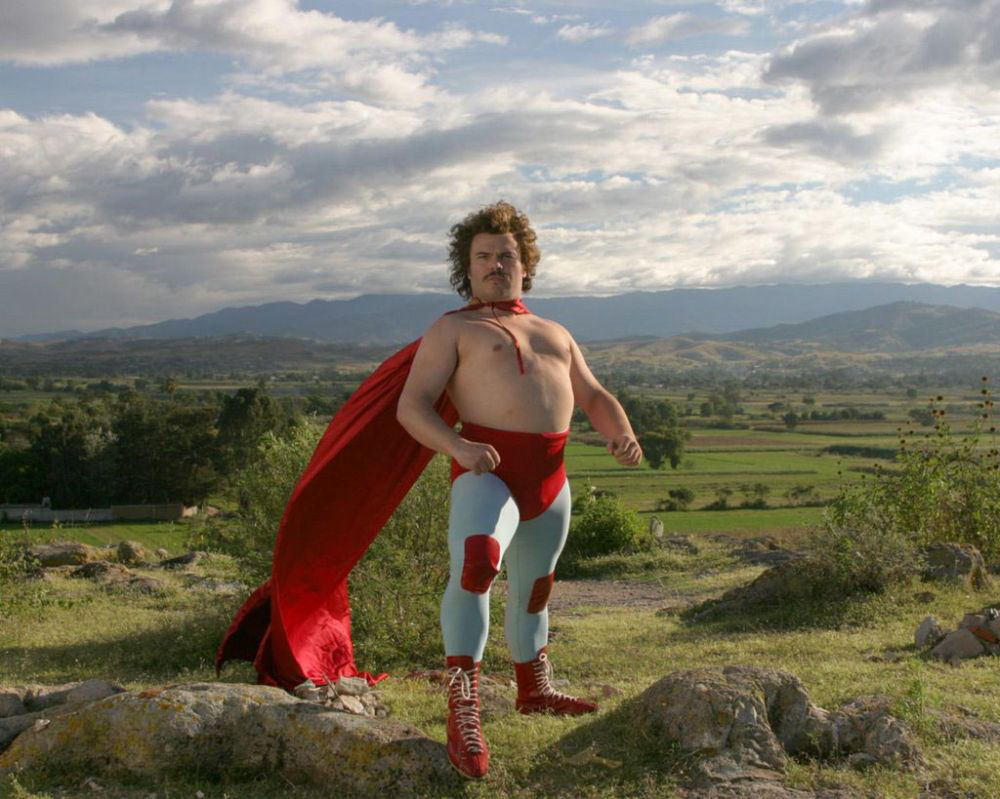
I went to see Nacho Libre this past weekend after having been warned by my number two son that it was "entirely too much like Napoleon Dynomite".

Different story. Different cast. Different location. Same feel.

Michael Graves is one of the most influencing voices in American architecture. His work usually has a retro minimalist "feel" whether he's designing a clock for Target or the Denver Central Library. Does anyone look at the Humana Building in Louisville, Kentucky and say, "hmm, so yeah it's one of the ten best buildings of the decade, but it's basically crap because it's entirely too similar to Disney's corporate building in Burbank"? Graves has an affinity for certain creative design elements.

Michael Graves is an architect and a designer.

Vera Wang's clothing designs share similarities. I can spot a Vera Wang dress in a window from across the street. She likes clean lines, crisp colors, and what are ruffles? She constructs garments with a definitive style.

Vera Wang is an architect and a designer.

James Horner's movie scores can be counted on for a haunting oboe solo and Hans Zimmer likes us to feel the score pounding in our chests or leaking from our tear ducts. They have certain music elements they like to incorporate in what they compose.

James Horner and Hans Zimmer are architects and designers.

Nacho Libre is similar to Napoleon Dynomite? Yeah, well the score to Troy is similar to the score to Enemy at the Gates and didn't I hear brass patterns from Gladiator in the Pirates of the Caribbean soundtrack?

Filmmakers are creating and constructing too. Doesn't it make sense that writers, directors, producers, and production people have certain similarities that underscore our work?

We, too, are architects and designers.

Tuesday, June 20, 2006

Who's Your Audience?

When I'm The Audience - My hair stylist, Lauren, moved to a salon in far north Dallas last month and since I don't like driving an hour and fifteen minutes in traffic for a thirty minute haircut, I had to find another stylist and here we go again.

It's the same thing over and over every time my stylist graduates college or moves on to a salon I either don't want to pay for or drive to -- your layers are too fluffy, your bangs are outdated, you need highlights, you don't need highlights, ever considered a perm? Regardless of my style, cut, color, or length, the new stylist knows best. Ha.

Here's the deal, girlie. I'm not out to compete with runway models or bag a man. I just want to look in the mirror without hating you.

STYLIST: But your hair is so -- so--

ME: Charlie's Angels?

STYLIST: No, they had straight cuts.

ME: Wrong angels.

My mirror is my audience. Not my co-workers or even those construction site guys who don't whistle as often as they did when I was twenty. Me. I'm the audience.

When I'm Not the Audience - My ladies ensemble sings all over the place. One of the first things we ask when selecting our music is "who is our audience?". Even for something like a fourth of July picnic, we must know the audience. We can't just sing any patriotic song. It doesn't work that way. Singing in front of an audience can feel like singing in your underwear but singing the wrong music in front of an audience is like singing the Texas fight song while sitting on the OU side --- in your underwear. We need to know two things --

(1) who is the audience and

(2) timing of that audience.

If we have an audience of ranchers and rodeo cowboys, we know the tired ol' "God Bless the USA" is gonna be a huge hit no matter what time of the year. If we have an audience of young adults, "God Bless the USA" is gonna be a drag unless the timing is right like during the high period of patriotism after the World Trade Center fell. Meanwhile, "Boogie Woogie Bugle Boy" is always going to be a hit with WW2 era senior adults and never going to get more than a few polite claps and crickets if we perform it in front of an audience of twenty somethings.

Who's Your Audience? - Yeah, it's a no-brainer question, but many writers don't know who they are writing their screenplay for. I'm just guessing here, but I think most of these aspiring screenwriters who can't answer the question "who's your audience?" are some of the ones who never went to film school. I'm not dissing them for not going to film school. I didn't go either. But how are they going to pitch the story if they don't know who the audience is?

I read a portion of a screenplay a week ago but before I started it, I asked, "who's your audience?" The reply was "I don't know. I just wrote a good story." I suppose that could be true. Maybe it's a very good story and we can figure out later whether it's a coming of age thing or something middle aged single men will watch. But if producers have to know who is going to watch a film before they make it, shouldn't writers know who is going to watch the film before they write it? Can you really wait until you're ready to market your screenplay before you figure out who you're marketing to?

Forgetting Your Audience - My lady's group recently asked a former Mavericks dancer to choreograph something for us. She's stunning, talented, personable, and has a gift for figuring out what works. We gave her a CD, told her who our audience was (no cheesecake stuff), and what our physical limitations are (no splits). Most of what she wrote for us worked. But we were afraid our conservative audience might not respond well to a few the moves that seemed too seductive.

"Oh my gosh, I'm so sorry" she said, "I forgot who your audience was."

Friday, June 16, 2006

When I Fall in Love With a Film


"Truth in science can be defined as the working hypothesis best suited to open the way to the next better one"
Konrad Lorens
Ever get sick of people repeating memorized lines from a film while you're trying to watch it? It's aggravating and makes the film experience uncomfortable. Why? Well, I have a theory. It's like a double date where one couple is already steaming up the windows and the other is still on overly polite "getting to know you" behavior. The back seat is already in love. The front seat is still saying their howdy-do's.

"Imprinting" is a theory of attachment discovered by German ethologist Niko Tinbergen or Konrad Lorenz who shared the 1973 Nobel Prize with Tinbergen and Karl von Frisch. I don't have my facts straight about who learned which part of this associative behavior stuff, but it has something to do with a rise in the body's levels of the chemical dopamine. Basically, it means you and I click and I'm suddenly taking mental engravings of the most miniscule and unimportant things about you -- a wrinkle in your smile, a cute unevenness in your hairline. Everything about you suddenly becomes special and I memorize it effortlessly.

My theory is that's what happens when we fall in love with a film -- imprinting. We all imprint in different ways but we attach ourselves to the film the same way we attach ourselves to anyone or anything else we fall in love with. That's why we memorize lines, music, and events -- we're in love.

My own imprinting of a film is three part:

(1) The score makes an audio imprint some place in the emotional side of my brain. I can hear any portion of the score later and tell you exactly where it was in the film and I relive the mystery, the adrenaline or the tears. It's like still hearing the voice of a person you're in love with long after you've hung up the phone.

(2) I identify my own set pieces -- lines or moments that I'll never forget and it won't necessarily be the ones filmmakers expect. Those lines and moments resurface in my brain even when I need them to go away so I can do my job, pay some bills, or work on my own writing. It's like that marvelous "new love" feeling that makes your chest flutter when you think about a special word or gesture or -- a kiss.

(3) I find myself loathe to watch other films that I expect to pale in what are usually unfair comparisons. Why bother going out with anyone else? I'll never feel about anyone the same way.

So, yeah, that's how falling in love with films works -- imprinting. Oh, and just like my children, dog, or the love of my life, tread warily when you speak of them in my presence. I and only I am free to criticize. Anyone else is running the risk of a black eye.

Wednesday, June 07, 2006

Cookie Dough Reality

The same argument takes place every time I collaborate on something with another writer. Does a story element have to be possible or probable or can it just be plausible?

Wait -- before we go there. Does a cookie sheet have to be greased or floured or can you bake cookies on it bare?

Same thing.

Is too.

You can't answer my cookie sheet question unless you know one or more of the following:

  • What kind of cookies?
  • Are there chocolate chips in them?
  • How well did you follow the recipe?
  • What temperature are you baking at?
  • Is there Teflon on the cookie sheet?
  • How long are you planning to bake them?
  • Is the oven conventional or convection?

There's more. But the point is, it's all about the cookies. Not me. The cookies.

It's about what AFFECTS the cookies, what's IN the cookies, and what ENVIRONMENT the cookies are made in. It's not about what affects me, my makeup, or what environment I'm in. Well, duh. I might be able to bake cookies at 98.6 degrees but do I really want to do that just because that's what my own temperature is? Or, maybe I should just set the oven to match the room temperature?

Story elements are not about what works in my life. They aren't about my environment or my reality. Story elements have to work in the story's reality -- in the reality where my characters exist. If that reality was influenced by own, fine. But it's still not about MY reality. It's about where the story is.

I think part of the problem here is that many writers only create realities that mirror their own.

Real men don't get emotionally attached to Volleyballs so we don't write that. (Castaway)

No man's dying wish is to watch Fred and Ginger instead of porn, car chases and explosions so we don't write that either. (The Green Mile)

A dog can't identify a murderer he saw 200 yards away behind a dirty upstairs window at midnight. Okay, scratch the window, scratch the murder, and scratch the dog. (Turner & Hooch)

Alrighty then. Now my story reflects my own reality and my thermostat is set at 350 degrees.

Thursday, May 18, 2006

Sensible Stories

My son and his buddy entertained me yesterday with girlfriend stories -- like how mall trips always end up at a purse counter where the giggling girls squeal like pigs as they fondle leather handbags and the guys stand far enough away to look like they are trying on belts, but near enough that the girls don't know how far away they are trying to stand.

They MUST fondle the handbags, I explained to them, because teenage girls are required by the laws of nature to not only try on, touch, and sniff everything they want to buy, but to also try on, touch and sniff the potential purchases of any other female with whom they are on speaking terms at that particular hour of the day -- oh, and also because people are basically sensory stimulated.

They were unconvinced. Girls are just stupid, they insisted.

Yes, they are, but if people weren't sensory stimulated, sad songs would yield no tears and a softly held hand wouldn't tremble. Nobody would get nauseous at rancid odors and who would impulse buy those lint gadgets and fondue machines by the cash register?

Oh sure, the general agreement among "experts" is that impulse buys are based on price, but why then will a kid go into Toys R Us and beg for a toy they've never wanted or even heard of before? Because it's cheap? Children aren't interested in price. They go into sensory overload at all those spinning yo-yo's, light-up yo-yo's, and glow-in-the-dark yo-yo's, only to later forsake a brand new Duncan Imperial for a ziplock bag of gray Play-Dough that was once six tidy tubs of assorted colors.

People are sensory. We respond positively to things that taste good, smell good, feel good, look good and sound good -- and negatively if they taste bad, smell bad, feel bad, look bad or sound bad.

That pretty much sums up my hypothesis about what is missing from my latest screenplay. It doesn't hold any of the viewers' senses hostage. I need John McClane walking on broken glass or Matthew Quigley thirsting in the desert.

While I'm not suggesting that sensory story elements should be primary, there's a reason As Time Goes By is forever associated with Casa Blanca and food fights with Animal House.

And, I have to defend the ziplock bag of Play-Dough even though it lacks the sensory flash of a glow-in-the-dark or light-up yo-yo. Play-Dough has sensory staying power. Long after the characters' names are forgotten, people still remember that scene from Ghost where Patrick Swayze and Demi Moore grope a lump of clay.

I was still mulling this whole sensory thing over when the guys abandoned my June Cleaver wisdom to check out the truck for sale next door by a neighbor who specializes in rebuilding performance cars. Neither kid needed the truck or even wanted the truck, but it was something to do.

When my son returned home, absent his buddy, I wanted to know what happened. Nothing, he said, until his buddy climbed in --

"He turned the ignition and a Hemi sprung to life. Then, the heavens opened up and a sparkling beam of light shone down on the dusty windshield and he hugged the steering wheel as a voice like thunder said, 'go ye into the bank and bring forth $9800' -- so he did."
ME: What, no burning bush?

SON: I didn't think you'd believe me.

ME: Well, at least it wasn't a leather purse.

SON: Stupid girls.

Sunday, May 14, 2006

What Producers Look For

Writers often wonder how an editor, agent, producer, or director could say something is good, or even great, but not right for them. Well, what IS right for them? Many publishing companies have a "list", but producers? Nope. Your agent may know where to shop your screenplay and you may even have researched similar projects that producers have developed, are generally interested in, or have openly stated they are lookng for, and those producers may have even responded affirmatively to your query.

Why, oh why then, if you send a brilliant piece of work to them, do you still get a form letter, postcard or brush off?

The most obvious answer is that the screenplay isn't so great. But let's assume it is. Not only is it great, but it's the right genre, the right budget, a great concept, and is exactly the type of project this producer or production company embraces. How can the regrettably letter say it's not what they are looking for? Of course, it's what they are looking for!

Yesterday, while my sister and I were shopping for her birthday gift, we stopped to check out a swimsuit sale on our way to buy the latest Red Hot Chili Peppers cd. I didn't really need another swimsuit and wouldn't have gone shopping for one at all, but these were a designer brand marked 70% off and there were hundreds to choose from.

I had too look. Had to.

But, hey, I knew exactly what I was looking for. It had to be black or mostly black, no frills, no high cut legs, no granny skirts, nothing too revealing, and it had to be one of those "makes you look ten pounds lighter" suits or I wasn't interested. Simple. But, I didn't find a thing.

As we left the store, my sister demanded to know why I hadn't wanted any of the hundred suits I'd seen and didn't bother to try on a single one when at least twenty swimsuits met my exact criteria. They were the right size, color, price, and material. Just what was I looking for?

Dunno, but I'll know it when I see it. I always do.

Thursday, April 06, 2006

Missing Story Beats

WFAA reporter Bert Lozano didn't miss a beat when a Streaker ran in front of the camera during his live report from The Colony. He barely blinked as a man in the buff blew past him, flopping in the breeze and honking a boat horn.

The reminder here for me, as a screenwriter, is to not allow unforeseen distractions to pull me off task to the point where I miss a beat -- a story beat. I'm easily distracted during the first draft if things don't work the way I planned in my outline -- things like potential side streets, clarifications, details that need expanding, character inconsistencies, potential plot holes, and stuff that just needs to be axed. My response is to immediately stop and deal with the problem right then and there.

Shame on me.

I should trust my outline. If not, I need to write a better outline.

Not only do interruptions disengage me from the story, but by extinguishing little fires, I'm likely starting one somewhere else in the story. The better approach for me is to make notes along the way and deal with the unforeseen once the primary objective of completing the rough draft is done. Then I can take a holistic look at the story and save myself a lot of grief.

May not work. But, that's my plan.

I have no doubt that the moment the camera was off, Bert either erupted in laughter or said something like "Hey, dude, nice evening for a brisk walk!" Whatever he said or did was AFTER he'd completed his report and he didn't let it shift his focus. Well done, Bert.

Tuesday, March 21, 2006

Storytelling & Story Writing

This is an outlining post, not an American Idol post. But, something Barry Manilow said tonight on AI was so simple and so obvious that I marvel I've never heard it said to a singer before. (Stop boo'ing me! I'll tie this up in a minute.) Manilow reminded the Idol contestants that they are not just vocalists, they are storytellers. He warned them to stop belting it out and remember to tell the story.

So, what does this have to do with screenwriting?

Fundamentals are critical, but at this stage of the American Idol game, those singers shouldn't have to focus on them. Proving you can belt out a song is not the same thing as singing it well. Same goes for us as writers. At the "writing the screenplay" stage of the game, we shouldn't have to focus on fundamentals or be so anxious to prove what good writers we are that we belt out a story without really telling it.

I'm not suggesting that fundamentals are unimportant. Nor am I suggesting that the pros don't ponder technical issues. But those are issues that need to be resolved at the outlining stage which is actually the "story writing" stage. The outline IS the story and the screenplay is the "telling of that story".

Outline = story
Screenplay = telling of that story

The lesson for me is that while ever-learning and ever-improving my craft is good, there is a time and place for fundamentals - the outline. Don't start the screenplay until the story and structure are in place. I should know the story so well that by the time I start writing the screenplay, I'm not thinking about the fundamentals at all. It's a no brainer. That doesn't mean there won't be changes along the way. There will be. But, when it comes time to write the screenplay, my focus should simply be on telling a good story.

Tuesday, February 21, 2006

Writing the Wrong Story

So I was learning music this week, convinced that it was the wrong song for me, and I had an epiphany...or car sickness. I'm not sure. Either way I began to wonder if that sinking feeling also comes to screenwriters who force themselves to write something that they know in their guts they don't have a knack for writing. I am not talking about professionals here because yeah, SO MANY of them read this blog. I mean wannabe writers who are good at one form or genre of writing but insist on writing another.

I should back up.

I probably haven't mentioned that I sing. I am the absolute very best of the mediocre. I'm also one sixth of an all female ensemble. We don't advertise, don't have a web site, and never sell CD's, t-shirts, or autographed photos at any of our performances. Still, we get plenty of bookings. Somebody who hears us tells their great Aunt Bertha and next thing you know, we're invited on a cruise or to sing at a women's event, opry house, or baseball game. We're amateurs but our combined voices get us star treatment wherever we sing.

Word of mouth. No advertising. How does that happen?

We're very careful that what we sing is perfect for the collective "voice" of our group. Not every song, no matter how good it is, works for us. A great arrangement could be disastrous if it doesn't fit our balance, the textures of our voices, or personalities. We've learned the hard way where our weaknesses are. We don't sing songs that are heavy in the middle and rarely sing two part arrangements. They just sound lazy. We like complex arrangements, tight harmony and three or more parts. Most importantly, we insist on learning the music so well that we aren't focused on mechanics during a performance.

On American Idol, the judges often say something like, "You're a good singer and it's a great song, but it was the wrong song for you." In many cases, NO song will work for that voice and they're just softening the blow. But usually, that statement means that the singer just needed a better fit for his or her voice. Just because you love the song doesn't mean you can sing it. Well, just because you love the story, does that qualify you to write it?

In screenwriting, we are advised by some to write what we know and by others to write what we love. But shouldn't we also write what we're good at writing? What if we have no knack for writing what we love? If we are supposed to write the stories in our heads, is it even possible to write the wrong story?

We writers need to know where our strengths and weaknesses are. I don't write rom coms because I frequently misplace my sense of humor (hey, I sing at a LOT of funerals). My strength is in drama. That's not to say that a drama writer can't learn to write rom coms or that there is not humor in drama, but unproduced writers should certainly showcase their best work.

We know that there are good stories that are poorly written, but aren't there also bad stories that are well written?

I'm reminded of a line from Who Framed Roger Rabbit where Jessica says, "I'm not bad, I'm just drawn that way." I don't want to give anyone who reads my work cause to say, "it's not a bad story, it's just written that way."

So, you tell me. Can a screenwriter actually write the wrong story?

Tuesday, February 14, 2006

Good Story or Pain Release?

My latest screenplay is about a mixed race girl who is separated from her brother by a stepmother who can't see past her own racial bias. While I didn't dwell too much on my inspiration for the story, the core is autobiographical. I have a that brother I have not seen since he was four years old.

The similarity ends there.

An old post by Jennifer Weiner has me wondering about my motives for writing this most recent screenplay. Weiner says publishers have a running gag about what sells and the joke says that all they gotta do is pick out an unhappy child and come back 20 years later and ask "where's the book?". She discusses in this article how pained childhoods, troubled love lifes, agents, discipline, employment and education affect the life of the writer. Then she says what we already know. A writer must write the story in his head, not what he thinks will sell.

Everything we say, everything we do, and everything we think is a product of accumulated knowledge which is formed, in part, by personal experience. That means authors leave their DNA in all of their stories one way or another, do they not? So, I don't think it matters whether I wrote this most recent story because I wanted to take a childhood lump of clay and sculpt it into a gleaming porcelain teapot as long as (1) it's the story in my head and (2) it's a damned good story.